Search This Blog

Sunday, January 18, 2026

Metal Oxide Varistor Structure and Application Overview

jb Capacitors brand logo for power and industrial electronics

In practical power and industrial electronics design, surge protection is rarely treated as an optional feature. Transient overvoltage caused by lightning, inductive load switching, or grid instability can place immediate stress on rectifiers, power switches, transformers, and control ICs.

Metal oxide varistors, commonly known as MOVs, are therefore integrated as a passive protection element in many AC-DC power supplies, switched-mode power supplies, and control boards. Rather than interrupting normal operation, MOVs operate silently in the background, activating only when voltage exceeds predefined thresholds.


Metal oxide varistor surge protection used in AC-DC and industrial power electronics
Metal oxide varistors are widely deployed to limit transient overvoltage in power and industrial electronics.

Understanding the Functional Role of MOVs in Circuit Design

From a design perspective, MOVs are typically positioned at the power entry stage, where they act as a first line of defense against incoming surges. When an abnormal voltage spike appears on the line, the MOV responds within nanoseconds by transitioning from a high-impedance state to a conductive state, thereby clamping the peak voltage seen by downstream components.

This behavior allows sensitive components such as bridge rectifiers, MOSFETs, and PWM controllers to operate within their safe electrical limits, even under harsh operating environments. Once the surge event passes, the MOV automatically returns to its original high-impedance condition, without affecting normal system operation.


Internal Structure and Working Principle

Zinc oxide metal oxide varistor internal structure and grain boundary model
Typical zinc oxide MOV structure shown for conceptual reference.

The internal structure of a metal oxide varistor is based on zinc oxide ceramic grains that are sintered together and sandwiched between two metal electrodes. Each grain boundary behaves as a semiconductor junction, and the collective effect of millions of these junctions creates a strongly nonlinear voltage-current characteristic.

Under normal operating voltage, only a negligible leakage current flows through the device. When a transient surge pushes the voltage beyond the varistor rating, conduction increases sharply across the grain boundaries, allowing the MOV to absorb and dissipate excess energy.

Design note: MOV performance and lifetime are directly related to surge energy exposure. Proper derating and selection are essential for long-term reliability.

Key Electrical Characteristics Considered During Selection

During the component selection process, engineers rarely focus on a single parameter. Instead, MOVs are evaluated using a combination of electrical and environmental characteristics that reflect real operating conditions.

Selection Factor Design Consideration
Varistor Voltage Defines the voltage level at which clamping action begins relative to nominal line voltage.
Disc Diameter Indicates the surge current and energy handling capability of the MOV.
Response Speed Ensures rapid suppression of fast transient events.
Operating Temperature Range Supports stable operation across ambient and internal temperature variations.
Regulatory Compliance Aligns with system-level environmental and safety requirements.

Application Scenarios Across Power and Industrial Electronics

Metal oxide varistors are commonly used in industrial power supplies, AC-DC adapters, and switched-mode power supplies where repeated transient stress is expected. They are also integrated into home appliance control boards, motor drive systems, inverter circuits, and dedicated surge protection modules.

In these applications, MOVs help reduce long-term electrical fatigue on downstream components, contributing to improved system robustness and extended product lifetime.


Further Evaluation of JVX Metal Oxide Varistors

The JVX Metal Oxide Varistor series from jb offers a wide varistor voltage range, multiple disc-size options, and operating temperature coverage suitable for industrial power, AC-DC conversion, and surge protection module designs.

Review detailed specifications or contact jb for application-level selection guidance.

Sunday, January 4, 2026

JMX & JLX Audio Capacitors Equivalent to Jantzen Alumen Z-cap and Mundorf

jb capacitors logo for industrial and power electronics
JMX and JLX audio capacitors with fast lead time

When engineers evaluate Jantzen Alumen Z-cap or Mundorf audio capacitors, the discussion rarely focuses on sound quality alone.

In practical audio design projects, factors such as lead time stability, specification transparency, and long-term design-in reliability often become equally important during evaluation.

For this reason, many teams explore electrically comparable alternatives that can support both prototype validation and production planning without adding unnecessary sourcing uncertainty.


Practical Audio Capacitor Alternatives from jb Capacitors

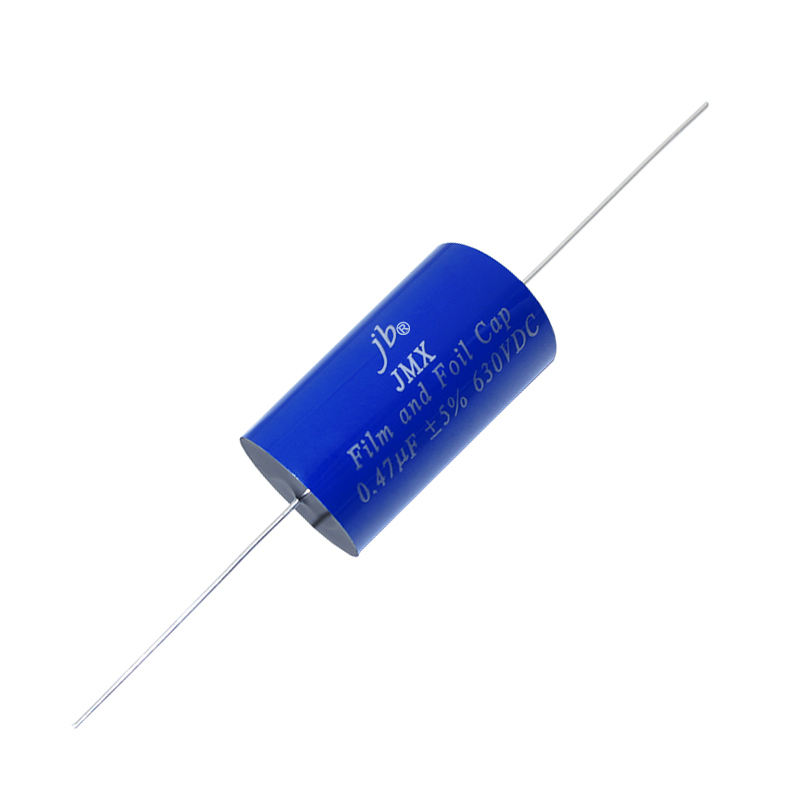
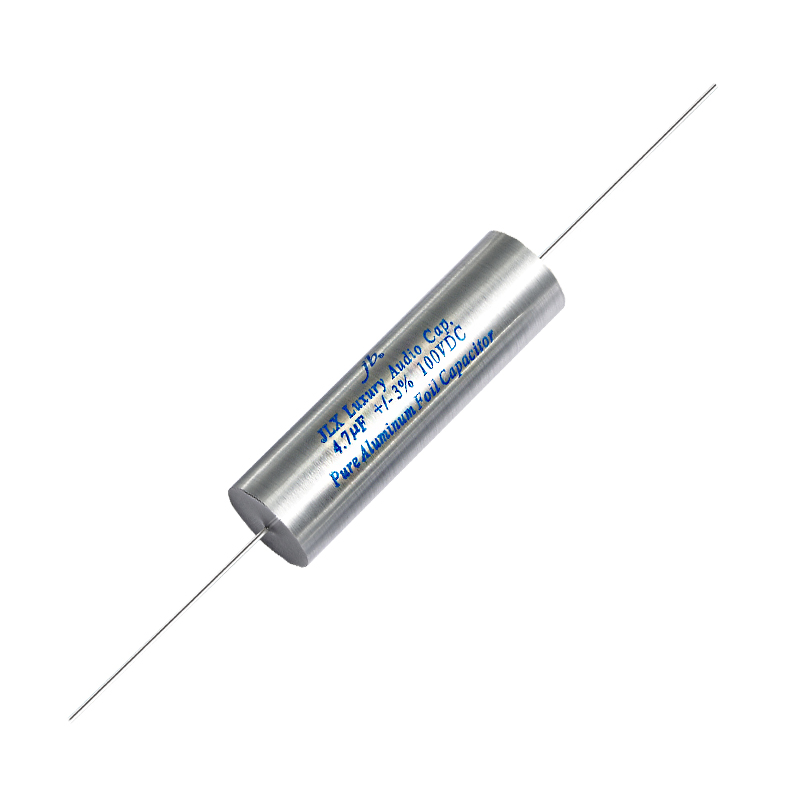
JMX and JLX audio capacitors from jb Capacitors are commonly evaluated in audio crossover and signal path designs as alternatives to established Jantzen and Mundorf series.

Their positioning focuses on predictable electrical behavior, clear specification disclosure, and sourcing conditions suitable for real-world project timelines.

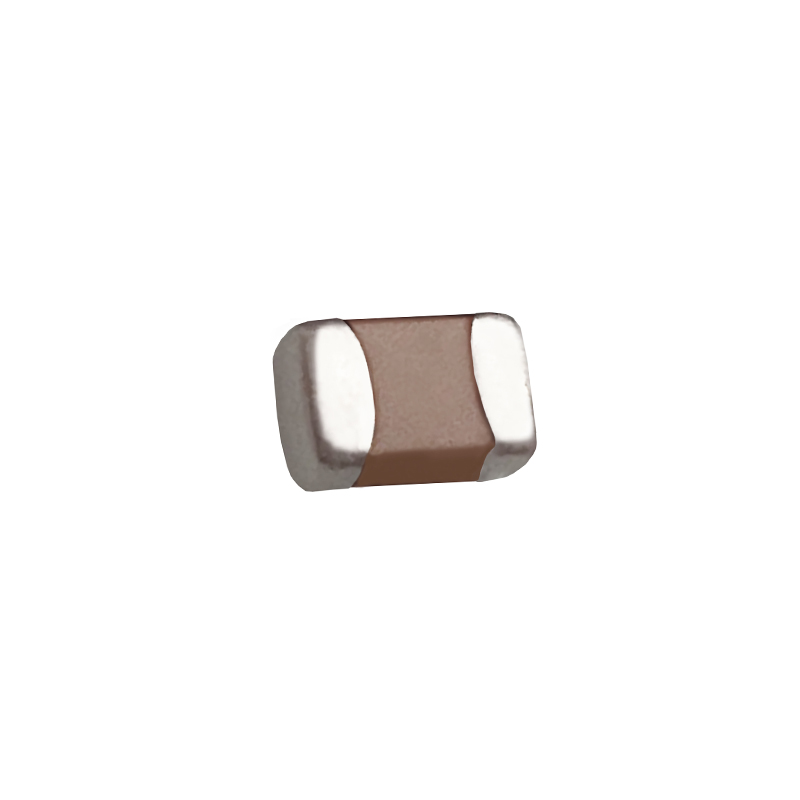
For supporting and decoupling functions, jb Capacitors also provides complementary series such as JYS MLCC, allowing engineers to consolidate sourcing within a single platform if required.


Audio Capacitor Comparison Overview

The table below provides a high-level comparison of commonly evaluated audio capacitor series, highlighting typical applications and key electrical characteristics.

Series Product Typical Application Key Characteristics Reference
JMX JMX audio capacitor polypropylene film axial Signal path
High-voltage audio circuits
Amplifiers / Crossovers
• Very low dissipation factor (≤0.0002 @ 1kHz)
• Very low ESR and inductance
• Rated up to 630VDC
View JMX
JLX JLX high-end audio capacitor tweeter crossover Tweeter crossover
Mid-range speakers
High-end audio systems
• ±3% tolerance @ 1kHz
• Very low dielectric absorption
• Low ESR and low inductance
View JLX
JYS JYS SMD multilayer ceramic chip capacitor MLCC Supporting circuits
Decoupling / Bypass
Volume production
• SMD MLCC structure
• Stable electrical performance
• Production-ready
View JYS

Why Engineers Evaluate JMX & JLX as Alternatives

  • Electrical characteristics aligned with common audio crossover and signal path requirements
  • Clear datasheet parameters that support design comparison
  • Lead time conditions suitable for both prototype and production planning

In many projects, the decision process prioritizes consistency between documented specifications, measured performance, and supply reliability rather than brand name alone.


Limited-Time RFQ Support Program

For engineering and sourcing teams currently evaluating audio capacitor options, jb Capacitors is offering a limited-time RFQ support program to assist with active design-in and component selection projects.

During the program period, RFQs submitted via the official website that include at least one part number or a clearly defined specification from the JMX, JLX, or JYS series will be reviewed as valid technical inquiries. Qualified submissions may receive a selected gift after internal verification.

Currently evaluating audio capacitors for a real project?

If you are reviewing crossover, amplifier, or signal path designs, you may share your requirements with our team for technical confirmation and specification discussion.

Submit Your RFQ